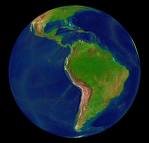
Ecuador’s judicial branch is, “threatened,” according to an Ecuadorian Supreme Court justice. The threat arises from a lottery meant to thin out the Supreme Court . A new constitution, approved last week, approved the act which if executed will take the Ecuadorian Supreme Court from thirty-one to twenty-one justices. The epitome of democracy!
See the CNN headline here: http://www.cnn.com/2008/WORLD/americas/10/28/ecuador.court.ap/index.html
Friday, October 31, 2008

Disney and the Third World
Walt Disney published many cartoons that depicted people from third world countries, especially people not of European descent, as inferior. These comics such as Donald Duck were targeted towards children but had significant political meanings. In some comics he portrayed indigenous people in Latin American as sub-human and compared them to what he should to be the superior white American race. These cartoons seem extremely dated in that I don't think cartoons that are so politically incorrect would be tolerated anymore.
Mob in Peru Protest at Police Station
After 71 people were hurt in a conflict between police and protestors in the south, angry villagers in Peru's northern jungle set fire to a police station in Lima, Peru. The mob had over a thousand participants and took 25 officers captive in San Martin province. It was reported that the mob was angered when police threw tear gas near a school and several children were affected and since mounting unrest has spread to a total of five provinces, as they press a variety of demands with local authorities or the central government.
Thursday, October 30, 2008
Chile: Achievements in AIDS Fight Marred by Irregularities
Soledad Barria, the health minister to Chile, has resigned on account of the AIDS scandal that has surfaced in regard to the government’s failure to notify people who tested positive for AIDS. Twenty-five people who tested positive for AIDS in 2004 were not notified, and two of them died. This occurred in the northern Tarapacá region of Chile. This carelessness has threatened Chile’s “exemplary image in the field of AIDS prevention and treatment”.
Four of the twenty-five people have still not been notified, as two of them left the country, one is homeless, and another is a mentally ill man. The scandal occurred when 34-year-old Dearnny Aguilar died from an pneumonia. She did not take the antiretroviral treatment that very well may have saved her life. Her husband also died due to AIDS.
The scandal revealed that many people do not return for their results and often provide false personal information. Therefore, this issue is much more complex than governmental ineffectiveness. The Health Committee in the lower house of Congress is considering improving the 2001 AIDS Law, or making it so that HIV tests are not “voluntary” and “confidential”.
Sand Theft in the Caribbean
Sand is disappearing in the small islands in the Caribbean, namely Puerto Rico where the sand is being used to finish buildings during this construction boom. Not only will this affect tourism, because who really wants to go to the Caribbean if there are no beaches, but it is also cause for enviornmental concerns. A gulley of sand was dug out that allowed salt water to mix in with a freshwater supply that was on the island, which, because of the salt water contamination, can no longer be used. In addition, the coastal islanders are now much more vulnerable to strong seas and flooding without the barrier of sand. Let's just hope that they don't get hit with too many hurricanes next season. To read more, click here.
Tuesday, October 28, 2008
FARC Rebels and Hostages
Leftist rebels have agreed to exchange letters with a self-appointed group of Colombians to discuss the possible release of hostages the rebels are holding.
The FARC posted the statement on one of its Web sites. The statement was electronically signed by the group's seven-man leadership council. They were responding to a 9/11 letter by a disparate group of Colombians, where they asked the FARC to write letters to "allow us to identify the terms to set an agenda to clarify the route toward an understanding regarding a hostage exchange." The government estimates the FARC is holding some 700 civilians and military personnel hostage. The FARC says it wants to exchange about 30 hostages for as many as 500 jailed guerrillas held in Colombian and U.S. prisons.
Amazon Jungle Dwellers Discovered

Earlier this year, a tribe of indigenous Amazonians were discovered in Brazil. It is believed that these individuals have never had any contact with the outside world, but threats from the surrounding areas are great. The land on which they reside is constantly in danger of being destroyed and if that happens, we will lose one of only 100 or so remaining isolated tribes in the world. Isn't it incredible to think that there are, as you read this, people living right now entirely
unaware of other humans and society?
Sources:
http://www.cnn.com/2008/WORLD/americas/05/30/brazil.tribes/index.html#cnnSTCText
http://www.abc.net.au/reslib/200805/r255773_1057478.jpg
unaware of other humans and society?
Sources:
http://www.cnn.com/2008/WORLD/americas/05/30/brazil.tribes/index.html#cnnSTCText
http://www.abc.net.au/reslib/200805/r255773_1057478.jpg
Sunday, October 26, 2008
Inequality Revealed
A recent World Bank study showed that between 25-50% of income inequality in Latin America are due to circumstances beyond the control of the individuals when they were children. These factors include ethnicity, gender, birth place, parents' occupations, and education levels. This index, the Human Opportunity Index, measures the percentage of opportunities needed to guarantee children's universal access to basic available services. Though this is not very encouraging information, it does give the world a platform from which to start fixing these inequalities. Read the full story here.
Friday, October 24, 2008
Cuban EU Relations
Not too long ago, Cuban relations with the United States and the European Union (EU) were severely strained. Now, following a formal signing ceremony with the EU, Cuba has agreed to resume open discussion with the European Union. In exchange for its political transparency, Cuba will now be eligible for much needed humanitarian aid, to reconstruct the country from the devastation left by hurricanes Ike and Gustav. Relations between Cuba and the EU were suspended for five years after the arrest of dissidents. The EU, in contrast to the United States, intends to expand its influence in Cuba. View the entire BBC story here:
http://news.bbc.co.uk/2/hi/americas/7685855.stm
http://news.bbc.co.uk/go/em/fr/-/2/hi/americas/7685855.stm
http://news.bbc.co.uk/2/hi/americas/7685855.stm
http://news.bbc.co.uk/go/em/fr/-/2/hi/americas/7685855.stm
Human Heads Discovered in Mexico
Two human heads accompanied by menacing drug messages have been found in central Mexico. A Mexico state police official in Cuautitlan reported that one head appeared in a box that was left in the parking lot of the police station. It came with a message threatening that federal police and members of the drug gang La Familia would be decapitated, said the official.
Read more here...
Read more here...
Indigenous Influences on the Spanish Language
Transculturation has has a huge affect on Latin America from everything including religion, style and agricultural practices. The influence of indigenous words on the Spanish language is an example of this transculturation. The Nahuatl word "cholo" was adopted by the Spanish in Mexico and used as a derogatory word to describe Mexicans. It leiterally meant Mexican dog. Now in the United States the word has been reappropriated by Mexican-Americans to mean somethinlike Mexican gangster. It is interesting how the definition of a word can change by who uses and where they use it.
US Trade Deal With Bolivia Suspended
Secretary of State Condoleeza Rice announced yesterday that the US will be suspending a trade deal with Bolivia due to their continued association with drugs and their reluctance to improve anti-drug efforts. This move is anticipated to cost Bolivia nearly 300,000 jobs and also more than $300 million in exports, which would be priced out of the US market. It will be interesting to see how this affects US - Bolivia relations in the long term. Read more about this story here.
Thursday, October 23, 2008
Violence in Mexico Kills 21 People
Mexico is currently engaged in aggressive warfare against drug traffickers. During twenty-four hours across Mexico, twenty-one people died. A toddler was killed when the car he was in crashed during a gun battle. Four men were shot and killed before a crowd of people at an amusement park.
Ciudad Juarez and Tijuana have experienced almost daily murders as Mexico is overwhelmed by a flood of drug-related carnage. Officials attribute the violence to cartels warring over profitable trafficking routes.
Read more here...
Ciudad Juarez and Tijuana have experienced almost daily murders as Mexico is overwhelmed by a flood of drug-related carnage. Officials attribute the violence to cartels warring over profitable trafficking routes.
Read more here...
"Kidnapped Voices" steals the hearts of the families of FARC hostages
Herbin Hoyos, 38, Colombian Journalist. He was kidnapped in 1994 for 17 days by the leftist guerilla group in Colombia, the FARC. During his time being kidnapped, the other kidnappees complained to him that journalists, like him, should be doing more the tell other people, other countries about what was going on in Colombia. When he was rescued, he began his radio program, "Kidnapped Voices."
"Kidnapped Voices" is a program that the FARC is almost forced to allow it's prisoners listen to by a request made by Hoyos. Hoyos finds the families of the kidnapped and allows them to talk to their kidnapped family members over the radio. He transmits a new message once a week and has so far transmitted 328,000 messages. he promises to be there at the release of all of thoses kidnapped to deliver the freedom hug and has so far given 11,017 hugs.
People consider him part of the family for all of the help and hope he has given these families. He selflessly claims that he has no social life and works 20 hours a day, dedicating his life to the people who have been kidnapped so that they can stay in touch, somewhat with their families outside. Hoyos claims that his program won't go off the air until the last prisoner has been released.
To read more about this wonderful story, click here
"Kidnapped Voices" is a program that the FARC is almost forced to allow it's prisoners listen to by a request made by Hoyos. Hoyos finds the families of the kidnapped and allows them to talk to their kidnapped family members over the radio. He transmits a new message once a week and has so far transmitted 328,000 messages. he promises to be there at the release of all of thoses kidnapped to deliver the freedom hug and has so far given 11,017 hugs.
People consider him part of the family for all of the help and hope he has given these families. He selflessly claims that he has no social life and works 20 hours a day, dedicating his life to the people who have been kidnapped so that they can stay in touch, somewhat with their families outside. Hoyos claims that his program won't go off the air until the last prisoner has been released.
To read more about this wonderful story, click here
Wednesday, October 22, 2008
Bolivia's set to vote for new constitution.
Bolivian Congress has agreed to hold a referendum on indigenous president Evo Morales’s new constitution that places more rights into the oppressed majority. Evo Morales, Bolivia’s first indigenous president, stated that he now feels he has fulfilled his obligation to the Bolivian people.
Morales’s administration has often been met with opposition from the middle and upper classes of mixed race. Despite this opposition, the constitution is expected to pass, as voters claim to want an end to the long-standing riots appealing for the constitution, and the issues and failed negotiations that usually ensue.
Morales had promised to only run for one more five-year term if the opposition lawmakers grant their support of the constitution. Both sides had to make compromises after their long debate, and this sacrifice was worthwhile in Morales’s eyes. His campaign in total has been dedicated to bestowing power to the oppressed population, so this constitution is his greatest accomplishment
"Now we have made history," Morales said. "This process of change cannot be turned back...neo-liberalism will never return to Bolivia."
For more information, refer to this link.
Last week I wrote about festivities celebrated in Latin America on October 31st, and today I'll write a little bit about one festivity here in the States that ties the global community together. This upcoming Halloween, trick-or-treaters in the Green Bay area will be distributing chocolates as they go from house to house. Unlike "Most of the world's chocolate," which, "comes from cocoa grown on small plantation farms in Africa or Latin America, where children between 5 and 17 work long hours in hard labor instead of going to school," this chocolates is produced via fair trade. Each chocolate being distributed this October 31st will come along with additional information about other fair trade items. It's important to keep in mind how much hard labor went into those mini pieces of chocolate we so much enjoy acquiring for free.
Source: http://www.greenbaypressgazette.com/article/20081018/GPG0101/810180665/1207/GPG01
Source: http://www.greenbaypressgazette.com/article/20081018/GPG0101/810180665/1207/GPG01
Tuesday, October 21, 2008
más para los golosos!

If you've ever been to Argentina and bought one of these on the street, you've probably been craving for another one ever since.
Alfajores are a a delicious sweet found in cafes and kiosks all over Argentina, as well as in parts of Peru and Uruguay. They usually consist of two soft or hard cookies sandwiched with any variety of jam, chocolate, or dulce de leche and covered in chocolate or merengue (apart from the equally delicious maicena variety, made with corn flour and dulce de leche and caked in coconut). If given the chance, give them a try!
Monday, October 20, 2008
Bulletproof Fashion
In Mexico City, a Colombian man named Miguel Caballero has opened a self-named boutique. Its claim to fame? Bulletproof clothing ranging from leather jackets to tuxedo shirts. Security has become a serious concern for even average people in Mexico City, completely unrelated to drug-trafficking. The bulletproof clothing is expensive, but effective. The entire sales staff can attest to that as they have to test it out in order to work there. Some think these clothes are more of a gimmick than they are necessary. Check it out here.
Saturday, October 18, 2008
6-Hour Workday in Venezuela
Venezuelan president Hugo Chavez is hoping to institute a new 6-hour workday by the end of the year. The proposed bill will change the current 8-hour day and will apparently enforce stricter penalties for those businesses who do not follow the rule. Some businesses stated that they will have to cut jobs if the proposal is actually passed, but the legislation will doubtlessly affect businesses in many different ways. Read more here
Friday, October 17, 2008
Police held thirty-four illegal Central American immigrants under custody until an angry crowd of hundreds of people in Mexico attacked the police. They did so in order to protect the immigrants after hearing that police allegedly sold them to human smugglers for $100 each. This occurred in the rural town of Rafael Lara Grajales, Puebla, as police forced the thirty-four immigrants into a van. Rioters set fire to a patrol car, a motorcycle, and a truck, and police responded to this attack with tear gas.
The migrants were able to escape due to the ensuing chaos, although twenty-one were promptly taken under custody again. Police are searching for the other thirteen immigrants. Central Americans often suffer such abuse while crossing Mexico on their travel to the United States; although on a rare occasion do Mexicans offer such protection to these victims. To read more detail about this occurrence one can follow this link.
Constitutions as Living Documents?
People sometimes refer to a constitution as a living document. In the United States this is only somewhat true. We have had the same constitution for 200 years and the amendments are the only parts that have changed over the two centuries. However, Latin America has a history of changing constitutions often. During the post-colonial era liberal governments would write a constitution and then it would be overturned in favor of a different type of constitution. It seems like Colombia created a new constitution almost every ten years during this period. This trend has died down somewhat in current times but at the end of September Ecuador ratified a new constitution. I am not sure if their are any benefits to the constant changing or if it is better to have a more permanent document in place, probably the second one because it offers more stability.
How 'bout that Cuban Oil
Foreign investors, specifically Americans, have been eyeing offshore oil in international waters between Cuba and the United States, for quite awhile now. A problem arises, however, from the trade embargo still being imposed on Cuba. Now petroleum seeking Americans have even more of a reason to covet Cuba’s black gold laden waters. Cuban oil reserves, based on new data, are double what they were originally thought to be, now estimated at twenty billion barrels (comparable to the oil reserves of the United States). Presidential candidate Barack Obama has intimated at less restricted relations with Cuba. Will the United States finally abandon its quasi containment policy in order to exploit Cuba’s oil reserves?
View the article "Cuba claims massive oil reserves" here: http://news.bbc.co.uk/2/hi/americas/7675234.stm
View the article "Cuba claims massive oil reserves" here: http://news.bbc.co.uk/2/hi/americas/7675234.stm
NFL Seeks Larger Latino Fanbase
On October 5th, The San Francisco 49ers played the Arizona Cardinals in Mexico City. This was the first NFL game ever to be played outside the United States. This was an attempt by the NFL to gain popularity amoung Latinos in Mexico as well as in the United States. It was estimated that the NFL now has 20 million fans in Mexico. That is more than any other country has combined outside of the US. The game sold out with 45,000 people in attendance. The success of the game may bring more games to Mexico in the future. Maybe other countries as well?
General Sentenced in Human Rights Case in Chile
After killing five dissidents during the former military dictatorship a retired Chile army general was sentenced to six years in prison. General Sergio Arellano participated in the killings during the "Caravan of Death" led by General Augusto Pinochet in 1973 several weeks after a military coup. Arellano led the "caravan" searching for dissidents, killing at least 90 people total. The 88-year old was sentenced by the Supreme Court on Wednesday.
Thursday, October 16, 2008
Cuidad Juarez
1,100 + people have been killed so far this year in Juarez, El Paso's across the border neighbor in Mexico. 37 people were killed, just over the weekend. Juarez has had more more murders so far this year than New York and Chicago combined had in 2007. Let's remind ourselves that New York and Chicago have 7 times as many people as Juarez, just to put it in perspective. People from the United States are increasingly afraid to go there. US soldiers are not allowed to go to the bars and nightclubs of Juarez, once popular hotspots for US military and civilians alike. As a result, stores and clubs in Juarez are closing, which, in the long run, will probably result in more people being involved in the bloody drug trade which has caused all of these murders.
After President Felipe Calderon announced a plan to attack and eliminate major drug lords in an effort to curb the drug trade, more and more violence has resulted. The innocent have been killed in the cross-fires and taxpayers must cover the cost of this violence in hospital bills and security. To read more about this sad story, click here
After President Felipe Calderon announced a plan to attack and eliminate major drug lords in an effort to curb the drug trade, more and more violence has resulted. The innocent have been killed in the cross-fires and taxpayers must cover the cost of this violence in hospital bills and security. To read more about this sad story, click here
One Immigrant's Story
This past summer I had the honor of working a man named Isaac Marquez. This year marks the 20th anniversary of the time that Isaac left his homeland, El Salvador, in search of a better life in the United States. The inspirational story of his experience was recorded and is something I think everyone should read. Here's the link to the newsletter it was published in: CLICK HERE
This particular article is entitled, New U.S. Citizen Was Determined to "Keep on Going." The other articles in this letter are worth checking out as well.
This particular article is entitled, New U.S. Citizen Was Determined to "Keep on Going." The other articles in this letter are worth checking out as well.
Caribbean getting pounded by Hurricane Omar
Hurricane Omar weakened Thursday after hitting the northern Leeward Islands in the Caribbean with powerful winds and rain. Shortly before approaching the islands as a Category 3 hurricane, Omar's maximum sustained winds had increased to 125 mph, but slowed a bit to 115 mph after moving rapidly away from the islands. The fast-moving storm was picking up speed, heading northeast at about 29 mph. All warnings and watches were discontinued for the Leeward Islands. Earlier, the 500,000 barrel-a-day oil refinery Hovensa, on St. Croix, was shutting down all equipment, which was to ensure the safety of employees and the operation of the refinery. The U.S. Coast Guard closed the Christiansted Harbor, where the refinery is located, on Tuesday. It will remain closed until the hurricane passes and all facilities are checked to be in good order. Puerto Rico and some portions of the northern Leeward Islands, which includes the Virgin Islands, could get up to 20 inches of rain. The storm is forecast to head into the open waters of the Atlantic Ocean after crossing over the Virgin Islands and sweeping past Puerto Rico, but hurricane tracks are subject to variation, and such long-range predictions can change.
Tuesday, October 14, 2008
Ecuador Approves a New Constitution
On September 28th, Ecuador overwhelmingly approved a new constitution with 64% of the vote. This new charter "establishes a new economic and social model that defends a harmonious relationship with nature as a base for national development". According to President Rafael Correa, this new system puts human rights ahead of the free market. It also establishes access to water as a basic right, and calls for universal education, even on the tertiary level.
However, the decision to pass this new constitution was far from unanimous and there is some staunch political rivalry occurring. One of the biggest opponents is Jaime Nebot, mayor of Guayaquil, who, with the support of the catholic church, managed to have his city reject the charter. However, this did not effect the overall outcome. The charter is controversial and ambitious, and it will be interesting to see how this plays out in the future. To read the full story, click here.
However, the decision to pass this new constitution was far from unanimous and there is some staunch political rivalry occurring. One of the biggest opponents is Jaime Nebot, mayor of Guayaquil, who, with the support of the catholic church, managed to have his city reject the charter. However, this did not effect the overall outcome. The charter is controversial and ambitious, and it will be interesting to see how this plays out in the future. To read the full story, click here.
Dominican Republic Immigrants

Monday October 13, 2008 the US Coast Guard returned 146 illegal immigrants to the Dominican Republic who were apparently traveling illegal into Puerto Rico. Some of these 146 people have previously attempted to access US borders through the seas, and territories such as Puerto Rico. 11 people are being tried in Puerto Rico by the US Courts for their multiple attempts to get into US territory.
Monday, October 13, 2008
Without Corn, There is No Country
In Mexico, activists are lobbying for the “right to nutrition” to be added to the list of constitutional rights. The motto for the campaign is “Sin Maís, No Hay País”, translating to, “Without Corn, There is no Country”, meaning that Mexico must make nutrition a priority for all its citizens. Currently, there is an estimated 18 million Mexican’s without an ensured food supply, but this campaign is hoping to reconstruct the current systems in place for ensuring nutrition of all Mexicans. One of the most important things they have to do, according to Adelita San Vincente, coordinator of the organization, is lessen their dependency on the United States, in case we ever fail or do not follow through. If that were to happen, 50% of their food supply would disappear. To read the full article, click here.
Vidas Robadas
Human trafficking, especially the forced prostitution of young women, is still a fairly common thing in parts of Latin America. Human rights groups recently have been especially pushing awareness of the issue, and it has begun to appear in the media too (there is a very popular telenovela in Argentina called "Vidas Robadas" about the subject). Read one mother's sob story here.
Haitian Child Servants
In the past few months Haiti has been devastated by multiple hurricanes: Fay, Gustav, Hanna, Ike. The country's poor are now destitute and those getting by are now struggling. Parents can't afford to feed their children and so as an alternative, they are becoming "restaveks." The term literally means to "stay with" someone else. These children are taken in by families who are better off than their own and the idea is that they will contribute to the household by doing some work in order to earn their room and board and be allowed to attend school. However, in practice what really happens is that they become cheap servants who are underfed and treated as second-class citizens. Very, very few are actually allowed to attend school. It's extremely sad and something needs to be done. When will things change?
Saturday, October 11, 2008
Inflation Rate Drops In Brazil
The rate of inflation in Brazil has dropped to the lowest it has been in a year, a recent report states. Consumer price increases dropped to .26 percent, down from .28 percent this August. The drop in the inflation rate follows a four-month long trend that highlights the steady decrease in the inflation rate. Food prices also fell, to .27 percent, making September the second month in a row to have a drop in food deflation. Read more here.
Friday, October 10, 2008
Departure of the President of Peru's Cabinet
Alan Garcia, the president of Peru, acquiesced to the resignation of his entire cabinet Friday. This in response to an oil kickbacks scandal. He did not nominate replacements. Audio conversations about kickbacks for directing government contracts to Norwegian oil company Discover Petroleum have been publicly aired, obviously affecting Garcia's government. Read more here.
Uruguay's Demographics
In my mind I stereotype all of the people in Latin American as being the same race even though they are all from very different countries. I was surprised to learn that Uruguay is 88 percent white, eight percent mestizo and four percent black according to the CIA World Factbook. The indigenous population is virtually nonexistent. I think that this is really interesting and means that the problems that other Latin American countries face with the discrimination of indigenous people are not a big problem in Uruguay. This information will make me more hesitant to generalize about the people who make up all the different and unique countries in Latin America.
Violence in Peru
A Maoist-inspired narco-terrorist group in Peru, called, “Shining Path,” has attacked convoys of civilians and soldiers traveling through Peru’s southeast province. In the 1980’s and 1990’s, the terrorist organization tried to take control of the government, killing some 70,000 people in the process. When reports of an ensuing government suppression of these narco-terrorist groups was recently released, violence between government soldiers and narco-terrorist groups simultaneously escalated, after a decade of near silence in the Peruvian Andes. Only fraction of their previous influence, the Shining Path is certainly not staging a comeback, but perhaps it would prefer that its relationship with area narcotics smugglers remains unmolested.
Click here to read the BBC article: http://news.bbc.co.uk/go/em/fr/-/2/hi/americas/7664107.stm
Click here to read the BBC article: http://news.bbc.co.uk/go/em/fr/-/2/hi/americas/7664107.stm
Haitian Bridge to be Rebuilt by US
After this summer's destructive floods in Haiti, the American Embassy has agreed to help rebuild an important bridge that was destroyed. Four tropical storms hit Haiti this summer, causing the collapse of many buildings, bridges, and homes. The Ennery bridge in the hard-hit northern coastal city of Gonaives is set to begin construction later this year. The United Nations has been there clearing away the muck, which has been causing some traffic in crossing the riverbed. The Haitian government and UN are also helping with the rebuilding, but have yet to announce the financial details.
Venezuela shuts down McDonalds
The Venezuelan government has ordered all McDonald's restaurants in the country closed for 48 hours for what it calls irregularities in the fast-food chain's financial books. President Hugo Chavez's government has regularly cracked down on U.S. companies. The order stands for Thursday through Saturday, affecting all 115 McDonald's restaurants nationwide. Authorities found "inconsistencies" in sales and purchases books as well as in taxes collected. President Hugo Chavezh as regularly cracked down on U.S. companies that have allegedly fallen behind on tax payments. Last year it shut down the subsidiary of Coca-Cola Co. for 48 hours for alleged bookkeeping irregularities. Chavez supporters often accuse U.S. companies of exploiting Venezuelan workers and have called for boycotts of American firms such as Coca-Cola, McDonald's and Nike.
I never know the animosity towards the US would go as far as cracking down on American companies in their country...
Wednesday, October 08, 2008
US potential Blocade in Bolivia
In response to the hasty dismissal of United States ambassadors in Bolivia, the United States has sent the Bolivian Ambassador home, and in addition, might decide to replace the trade tariffs that Bolivia has been exempt of since 1991 following negotiations between the two countries. This "blocade" could potentially force 20,000 Bolivians out of jobs and drastically reduce imports into Bolivia. However, Bolivian president Evo Morales says not to worry. Morales hopes that if the situation does arise where trade connections to the United States are ended, Bolivia can rely on its natural resources and the resources of the countries around it to keep it afloat. To read more click here
Tuesday, October 07, 2008
Latin America and the 2008 Election

Many people are starting to believe that the 2008 Presidential election will have no effect, positive or negative, on Latin America, although the election is highly focused on foreign policy. Neither Obama or McCain have said anything substantial about Latin America in the election process and it seems apparent that they have no plans for anything large in the future. Both candidates are focused primarily on the Middle East. So what does this mean for future relations with Latin America?
yerba mate
Yerba mate is a popular beverage across Argentina and Uruguay and parts of Chile and Brazil. It can be drunk sweet or bitter or with coffee or juice, and is usually a social activity (much like hookah is in the Middle East). Normally, the mate (gourd in which it is served) is filled nearly to the brim with yerba (the tea leaves) and then soaked in hot water and passed around, each person emptying the gourd and passing it back to the server to refill it. It is commonly consumed with cookies or crackers.
Monday, October 06, 2008
The Latino Vote
We've been talking lately about the tremendous potential Latinos have in the United States to impact the upcoming presidential elections. This week Colombian singer Shakira announced her endorsement of the Democratic presidential candidate, Barack Obama. In addition to her endorsement, Shakira stated, "I'd like to invite the Latino community to go out and vote, because they can make a huge difference. This country is incredibly important to me, as it is for the rest of the world, because the U.S. economy is crucial to other world economies. And world peace depends largely on the who is driving the politics of this country." But why Obama? "I support Barack Obama because I think he's the person who can truly represent what the U.S. is to other countries. I feel in my heart that he can restore peace and confidence in the U.S.," said Shakira.
On another note, we've been discussing the racial divide between Latinos and African Americans in the United States. What statement does Shakira's endorsement make in regards to this issue?
Source: http://www.peopleenespanol.com/pespanol/en/articles/0,22490,1847610,00.html
On another note, we've been discussing the racial divide between Latinos and African Americans in the United States. What statement does Shakira's endorsement make in regards to this issue?
Source: http://www.peopleenespanol.com/pespanol/en/articles/0,22490,1847610,00.html
Friday, October 03, 2008
Mexicans sending less money home from US
A statement from the Banco de Mexico this past month said that Mexicans in the US sent 12.2% less money to family and friends in Mexico. The statement compared the statistic to that of last August. The $1.9 million decline is a direct result from the terrible state of the economy in the United States. Remittances have declined 4% already this year, so the recent staticstic is just following the trend. The state of the economy mirrors the recent increase in unemployment among the Mexican population. Read more about this trend in Mexico here
Puerto Rico Gains from U.S. Bailout Package
Included in the economic bailout package passed Friday by Congress was the renewal of a rum tax rebate to the U.S. Caribbean territories. Puerto Rico and the U.S. Virgin Islands utilize the money to pay for public services and infrastructure. The rebate returns "all but 25 cents of the $13.50 in federal excise taxes levied per proof gallon of rum produced in the islands." It lapsed at the end of 2007. The bailout package recently passed by Congress lengthens it through 2009. Read more here..
food shortage in Haiti
When storms ravaged the Caribbean in August and September, Haiti was hit the hardest. Haiti, the poorest country in the Western Hemisphere, is especially vincible due to extensive deforestation and a dire need for infrastructure. Death tolls have recently doubled, from the government's original claim of 425 lost lives, to the recent toll of 800 deaths.
Just months before the storm, riots were formed in Haiti due to a shortage of food. The cost of staple foods such as rice, beans, and flour have been raised 50% in the past year. Now, the storms have destroyed vital farm land, further contributing to the food crisis and the impossible food prices.
Drug Crackdown in Mexico
The Mexican government recently began a crackdown on the drug trade, and since then, more than 40 percent of Mexicans said they feel less secure than they did before. Only a quarter of Mexicans that were polled said they felt safer since President Felipe Calderon sent over 20,000 troops to battle drug cartels across the nation. Just over a quarter say they only feel the same level of security. Since the police stepped up their efforts against drug trade nearly two years ago, violence has greatly increased.
Dominican Mets Player Commits Hit and Run
New York Mets pitcher, Ambiorix Burgos hit and killed two women while driving an SUV in the Dominican Republic. The two were struck Tuesday evening by a new Hummer registered to the Mets reliever in the Dominican Republic. Edwin Silvestre Sanchez, a relative of Burgos, told investigators that he was the driver at fault. Regarding the player's potential involvement in the hit-and-run accident that unfortunately killed two women in the Dominican Republic," the Mets said in a statement. "We take this matter very seriously and have begun an internal investigation to ascertain the facts. Our thoughts and sympathies are with the families of the victims. Burgos was also arrested last month in New York on assault and harassment charges after being accused of throwing his girlfriend to the ground, where he appeared in court on those charges but did not enter a plea.
Presidente Calderon of México, sees the legalization of minor drug use in México’s near future.
The proposal would allow authorities to focus all of their attention on dealers and cartels transporting and distributing large amounts of drugs, amounts, which greatly surpass what a lone individual could consume. This plan however, goes far beyond the use of simply marijuana; it extends to include the use of cocaine, heroin, opium, and methamphetamine. What will this mean for drug trafficking between the United States and México? Tighter borders have trapped much of the drug trafficking below the U.S./Mexican border. Will “drug tourists” soon be flooding over the Mexican border in droves? View the story here: http://www.reuters.com/article/email/idUSTRE4918NK20081003


Personally, my favourite part of Buenos Aires is La Boca, the proclaimed artists' sector of Argentina's capital city. It is said that the buildings are painted the way they are because when the immigrants arrived in the 1800s they couldn't afford to buy paint at full price, and thus settled for anything they could get (ending up with all of the colors nobody had used).
Shown are a few examples of some of La Boca's many colorful streets:
Thursday, October 02, 2008
The Amazing Livan Hernandez

A two-time All-Star, Hernández is considered to be a great defensive pitcher, having made just 11 errors in his career. He is described as a workhorse; he throws many pitches, pitches many innings, and makes every start he needs to in order to provide his team's bullpen much rest. Between 1998 and 2007, he never pitched fewer than 199 innings in any given season (in 1999 he threw "only" 199 2/3 innings). He led the National League in innings pitched in three consecutive seasons, 2003 through 2005, and led the league in complete games for the first two of those years. In 2005, he once threw 150 pitches in nine innings, although the game went into extra innings after he left. In 2004 and 2005, he led the major leagues with 3,927 and 4,009 pitches, respectively. Hernández also is a dangerous hitter, helping his own cause with the bat, and won the Silver Slugger award at the pitcher position in 2004.
Russia looking to have greater influence in Latin America
South American country, Bolivia, following suit with it's growing partner Venezuela, is set to buy arms from Russia. Russia's top diplomat in Bolivia said that Bolivia's plan to purchase 5 civil defense helicopters will only deepen the relationship between these two countries. Ambassador Gubalev and his country, Russia, want to extend their influence in Latin America including military spheres of influence. Russia is set to begin military exercises in the caribbean close to venezuela before the end of the year. Bolivia is looking to purchase the helicopters to help flood victims and perhaps even to fight in the drug war, which, has traditionally been done in partnership with the US. And since Bolivia kicked the United State ambassador out of their country, they are now looking for help elsewhere. To read more about this click here
Wednesday, October 01, 2008
Un Día Festivo de Octubre
Happy October! I woke up to spider webs and ghosts sprawled out across my lobby this morning and found it only appropriate to write today about el Día de Los Muertos. Celebrated especially in Mexico, this holiday (a.k.a. Day of the Dead) honors family members who have passed away. It is the idea that on this day (October 31st), the souls of the dead come back and are with the families. To celebrate the occasion, there are many traditional foods that are prepared, including Pan de Muerto (Bread of the Dead). Here's a link with the recipe: Pan de Muerto
Enjoy!!
Enjoy!!
Tuesday, September 30, 2008
Brazilian Stock Market Crashes Along with the United States
Yesterday was an epic day in Brazilian Stock Market history. Trading was halted for approximately half an hour following the news that the $700 billion bailout plan for American markets had not passed. Before this halt, markets crashed 10.6% and immediately after trading resumed, shares continued to fall, reaching as low as 13%. Mexico's markets went down 6.4% and Argentina's markets went down 8.7%.
This illustrates how definitely the Untied States and Latin America are intertwined. How will Latin America continue to be affected by the economic turmoil of the United States? Read the full article here.
This illustrates how definitely the Untied States and Latin America are intertwined. How will Latin America continue to be affected by the economic turmoil of the United States? Read the full article here.
Reforestation in Haiti

The Dominican Republic's government is going to give Haiti trees to rebuild the forest on the border of the island that they share. The Dominican Republic has 33 percent of trees on the border while Haiti has a mere 3 percent. The motivation for reforesting the border is that without trees to protect the land, mudslides and flooding have become a greater problem due to the recent hurricanes, leaving the death toll at 426. It is very important that the Dominican government is taking this step, because historically the relationship between the two countries has been hostile. There is still a lot of racism and prejudice towards Haitians in the Dominican today.
The Brief Wondrous Life of Oscar Wao
For my Latin American Studies 101 class we are reading The Brief Wondrous Life of Oscar Wao by Junot Diaz. It is a very interesting book about a Dominican boy growing up in New Jersey. He is a weird kid and has trouble fitting in with his peers but also recieves a lot of grief for not being a good Dominican man because he is not popular with the ladies. It is also a good book if you are interestead in learning about the Trujillo dictatorship and how it impacted the ordinary people in the Dominican Republic.
Monday, September 29, 2008
Sunday, September 28, 2008
New consitution for Ecuador??
It appears that the answer to the above question is yes. Polls on the mainland (not including Galapagos) closed two hours ago, and exit polls show 2 out of 3 Ecuadorians supporting the proposed constitution. In Ecuador, voting is an obligatory civic duty, though "null" is an option, along with "NO" and "SI".
The current version of the Constitution was approved in 1998.
The new proposed Constitution is the idea and project of President Rafael Correa and members of his Constitutional Assembly. Greatest opposition for the proposed constitution comes from Guayaquil, the country's largest city, which lies on the coast. One fear of the opponents is that power will be centralized in the federal government, and that local governments will have less autonomy.
Other changes in the new Constitution:
> no foreign military bases will be allowed in the country (there is currently a US air base in Manta, the only one in South America)
> allows reelection of the President
> the Episcopal and Catholic churches consider that certain parts "open the door to abortion"
> free education (up to university level)
Correa fears the likely bitter opposition he will face from Guayaquil residents. He said that if he lost he would resign, but it looks like this will not be happening.
The current version of the Constitution was approved in 1998.
The new proposed Constitution is the idea and project of President Rafael Correa and members of his Constitutional Assembly. Greatest opposition for the proposed constitution comes from Guayaquil, the country's largest city, which lies on the coast. One fear of the opponents is that power will be centralized in the federal government, and that local governments will have less autonomy.
Other changes in the new Constitution:
> no foreign military bases will be allowed in the country (there is currently a US air base in Manta, the only one in South America)
> allows reelection of the President
> the Episcopal and Catholic churches consider that certain parts "open the door to abortion"
> free education (up to university level)
Correa fears the likely bitter opposition he will face from Guayaquil residents. He said that if he lost he would resign, but it looks like this will not be happening.
Friday, September 26, 2008
Paz Sin Fronteras
When Gray Miles came into class to talk about Colombia, I asked him about the recent conflict between Colombia and Ecuador. Given the persistent fighting, famous Latin singer Juanes, along with a few other artists, held a giant peace concert on the Colombia-Venezuela border called 'Paz Sin Fronteras,' 'Peace Without Borders.' Check out a clip from it below!
http://www.youtube.com/watch?v=jKobA-Jt28E
What do you think this indicates about the citizens of the two nations?
http://www.youtube.com/watch?v=jKobA-Jt28E
What do you think this indicates about the citizens of the two nations?
Unrest in Bolivia
 - picture from Reuters.com
In Bolivia, the poor and indigenous are rioting, setting up roadblocks, and shouting they do not fear death.
A minority group of non-indigenous Whites owns the majority of Bolivian natural resources. President Evo Morales, an Aymara Indian and former coca farmer, came into power because of his promise to redistribute natural gas revenues and farming lands to the indigenous poor. As expected, Morales' policies have angered the wealthy White landowners, who have no intentions of parting with their economic status; but the poor indigenous Bolivians support the president’s policies. To get the word out, and to get on a television program, Morales appeared on the Daily Show:
Daily Show interview w/ Jon Stewart & Evo Morales:
Daily Show interview w/ Jon Stewart & Evo Morales:
State petroleum revenues have increased and private lands have been reallocated, but peace remains elusive in the poorest country south of the Panama Canal. Bolivia is still an underdeveloped “fringe” nation whose neighbors are always eager to take advantage of Bolivia’s natural resources. What improvements have been made since Evo took power? Change never comes easy, see Bolivia's current situation: http://www.reuters.com/news/video?videoId=91210
Guantanamo Prosecutor Quits
A U.S. military prosecutor at Guantanamo Bay has quit because of ethical disputes with his superiors. He said they got rid of evidence that could help clear a young Afghan detainee of war crimes. The prosecutor, described the disagreements in a statement supporting a defense bid to dismiss the charges against Mohammed Jawad. Jawad, who was captured in Afghanistan when he was 16, is accused of throwing a grenade that wounded two U.S. soldiers and their interpreter in December 2002. He faces a maximum life sentence at a trial scheduled to begin in December. Vandeveld said prosecutors knew that Jawad may have been drugged before the attack and that the Afghan Interior Ministry said two other men had confessed to the same crime, according to Michael Berrigan, deputy chief defense counsel for the Guantanamo tribunals. Jawad is one of roughly two dozen Guantanamo detainees facing charges. Military prosecutors say they plan trials for about 200 men held here on suspicion of links to al Qaeda or the Taliban.
Is this part of the reason that many countries, including some in Latin America think that America is an imperialistic country? I thought Americans don't have to worry about human rights...
Venezuelan President Goes on 5-Country Tour
President Hugo Chavez of Venezuela began his tour of five countries last Sunday, with a stop in Cuba where he visited a fragile Fidel Castro, the former Cuban President. Pictures have been released of Chavez being greeted warmly by current Cuban President Raul Castro at the airport in Havana. After meeting up with Fidel that Sunday night, Chavez was off to Beijing. His tour also included stops in Moscow, another Russian city yet to be identified, Portugal, and France. During these meetings he planned to discuss various issues on Europe, the world, and their relationship.
Castro Comments on Obama
Presidential candidate Barack Obama plans to continue the trade embargo with Cuba if he is elected president. However, his attitude towards travel and relations with Cuba are more open. He wants to ease travel restrictions, and make it possible for relatives of Cuban citizens to send their families money from the United States. Fidel Castro commented on the candidate saying that Obama is "the most progressive candidate to the U.S. presidency." Castro then goes on to be more critical of Obama and his support of continuing the trade embargo against Cuba.
For more information, see the New York Times article: "Castro Weighs In On Obama" May 26, 2008
Potential Attempt on Chavez's Life Thwarted
Authorities arrested two in a suspected plot to murder President Hugo Chavez of Venezuela. Venezuela's topmost security official reported Wednesday that the plot was to destroy Chavez's plane with an anti-tank weapon. Six have been apprehended for purportedly being linked to the plot. Read more here.
Seized Memory Stick Gives Names Of 9,000+ FARC Rebels
The guerrila movement in Colombia took another hit this week when a lost memory stick made known the names of over 9,000 rebels to Colombian officials. The memory stick held not only their names, but also their aliases, identity numbers, and photos of some of the rebels. This development is not the only bad thing that has happened to the FARC resistance recently. Colombian government said it has used other technological information to aid in capturing individuals invovled in the resistance. Read more about this recent development here.
Thursday, September 25, 2008
Chile's Sexual Revolution
The New York Times published an article discussing what they label as a sexual revolution in Chile. Under the Pinochet regime sexual education was taken out of schools and was just reimplemented in the 1990s. This means that parents of teenagers now never had formal sexual education so are not teaching it to their children. There is a huge trend of parties that attract teenagers who dance and try to make out with the most people at the party. These parties are advertised to teens on the internet and create a competitive and sexually provocative setting. To read the article click here.
Acai Frenzy
If you've been to Freshens here on campus you probably noticed their new acai smoothie. Acai is a fruit grown in the Amazon which has become increasingly popular in the last couple of years. It has always been a cheap staple in the diet of Brazil, but it is now becoming trendy all over the world because of its nutritious qualities. Acai also has the potential to preserve more of the rainforest because it is something valuable that grows on trees instead of in their place. However, there is a fear that forest will be clear cut to plant "orchards" of acai. Will the family harvesters be replaced by conglomerates?
Wednesday, September 24, 2008
Father loses son to brazil
Four years ago, David Goldman waved goodbye to his wife and mother-in-law and his four year old son, Sean, at a new Jersey airport to wish them well on what was supposed to be a two week family vacation to his wife's native country, Brazil. What he didn't know, was that she had no intention of coming back. Once she got to Brazil, David recieved a call from Bruna, his wife, telling him that she wasn't going to return to the US and that if he ever wanted to see his son Sean again, he would have to give her sole custody. While in Brazil, Bruna married a prominent lawyer from a well-off brazilian family.
David brought his case to the court and it has been in limbo between US custody laws, Brazil custody laws and international laws between the two countries. According to the Hague treaties, which both countries have signed, Sean should have been returned to the US, however, the brazilian courts waited too long to act on anything and decided, as it had been a year, that Sean had been in Brazil too long to take him away from his mother.
Four years later, Bruna died giving birth to her new husband's baby and David thought that after all of the fighting in the courts, that Sean was finally his. Suddenly, Sean's last name was changed, and Goldman was erased from the records. Goldman is now trying to find a way for his Sean's last name to become Goldman again and for his chance to take his son back, but will the Brazilian courts follow their own custody laws that would return Sean to the United States, or will the influential brazilian family prevail? To read more click here
David brought his case to the court and it has been in limbo between US custody laws, Brazil custody laws and international laws between the two countries. According to the Hague treaties, which both countries have signed, Sean should have been returned to the US, however, the brazilian courts waited too long to act on anything and decided, as it had been a year, that Sean had been in Brazil too long to take him away from his mother.
Four years later, Bruna died giving birth to her new husband's baby and David thought that after all of the fighting in the courts, that Sean was finally his. Suddenly, Sean's last name was changed, and Goldman was erased from the records. Goldman is now trying to find a way for his Sean's last name to become Goldman again and for his chance to take his son back, but will the Brazilian courts follow their own custody laws that would return Sean to the United States, or will the influential brazilian family prevail? To read more click here
Caribbean Ravaged by Hurricanes
Four hurricanes have hit the Caribbean and Central America particularly fiercely in the last 30 days. Hurricanes Fay, Gustav, Hanna, and Ike have all left the islands devastated, with a total of 600 dead and 80,000 homeless. Some of the nations affected the most include Cuba, the Dominican Republic, and Haiti, the poorest nation in the Western Hemisphere. With regards to their economic state before, one can only imagine what sort of economic state they are in now. How will these nations and the rest of the world respond to this crisis? Read the news story here.
Tuesday, September 23, 2008
Monday, September 22, 2008
Chile's Sexual Revolution
The New York Times published an article discussing what they label as a sexual revolution in Chile. Under the Pinochet regime sexual education was taken out of schools and was just reimplemented in the 1990s. This means that parents of teenagers now never had formal sexual education so are not teaching it to their children. There is a huge trend of parties that attract teenagers who dance and try to make out with the most people at the party. These parties are advertised to teens on the internet and create a competitive and sexually provocative setting. To read the article click here.
Saturday, September 20, 2008
Friday, September 19, 2008
A Glimpse Into The Lives of Haitian Child Laborers
A recent article in the New York Times highlights the lives of young Haitian child laborers, restaveks. It discusses the impact of the recent hurricanes on the lives of these children, stating that up to 30,000 have been affected by the storms. Many of the restaveks are said to be beaten, sexually abused, denied education, and "treated like animals." The author of the article talks to two 12-year old girls, Widna and Widnise, who say they are treated better than most of the other children in their small town, as they are only "hit on their palms if they are disobedient but do not receive lashings on their head, as they say many of the restaveks in nearby homes receive."
The article shows just a glimpse of the state of affairs in the small island country.
The article shows just a glimpse of the state of affairs in the small island country.
Latin American film series
As I wander around campus, I discover more incredible resources provided to the Tulane student. I recently discovered a Latin American film series that was particularly interesting. Every Thursday evening at 7:00pm in room 102 of Jones Hall, a featured film dealing with Latin American subjects will be presented to the audience. The current series examines totalitarian governments in Latin American and their effects on children.
Mexico Prison Riot Kills 19
At La Mesa State Penitentiary in Tijuana, Mexico, the second riot in a week broke out in prison walls, resulting in police shooting and killing 19 inmates. Another 12 inmates were injured and two are in critical condition after Wednesday's riot. Families of inmates claim the riot began on Wednesday because of claims that they had not been given food or water since Sunday's first riot, while state authorities claim it was just "prison troublemakers." La Mesa's warden and two other top prison officials have been suspended and state authorities plan on conducting an investigation of irregular conduct. Instances like this in La Mesa contribute to the notion that Mexico's prison systems are corrupt and overcrowded. La Mesa inmates became infamous worldwide after they in effect built and ran "their own city" inside the prison courtyard, complete with the buying and selling of townhomes, running shops, and hiring prostitutes. Since then, violence and outbreaks still continue to be an issue at La Mesa and other Mexican prisons.
Youtube Gets Political
In October of 2006, street demonstrations took place in major cities in Spain to protest the lack of affordable housing, especially for young people. This prevalent issue for Spanish youth materialized in videos such as this youtube video by Toni A. Martinez.
Colombian General Montoya Linked to Paramilitaries
General Mario Montoya has for years been one entrusted to look after the aid package provided by the U.S. to the Colombian army. The head of Colombia's army, he has now been named by a witness, a former paramilitary fighter, as joining forces with death squads that took control of Medellin's impoverished neighborhoods from guerrillas a few years ago. This could be detrimental to the current government, headed by President Uribe. Read more here...
Thursday, September 18, 2008
Report accuses Chávez of undermining democracy in Venezuela
September 12, Hugo Chavez ordered the US ambassador to Venezuela to leave his country. He accused the diplomat of conspiring against him and his adminstration and told him to leave within the following 72 hours. He also told his ambassador in the US to leave and return to Venezuela. He said that another US embassador would not be welcome in Venezuela, "until there is a US government that respects the people of Latin America." Hugo Chavez has always been kind of "out there" but this time, he may have stepped too far. The US is Venezuela's number one oil client and obviously now, diplomatic relations will be tight. To read more, click here.
An Amazonian Oil Dilemma
It was recently brought to light that oil plots in the Western Amazon are now becoming a threat not only to the environment but to the indigenous peoples that reside in the area. There are currently 180 oil and gas lots operated by 35 multinational companies. The lots encroach on some of the most important and biodiverse regions of the forest. Further, they are also encroaching on the lands of the indigenous peoples there, a huge violation of their rights. In fact, in August, legislation was being reviewed to lower the community consent needed to exploit their territories.
Sometime this month, PeruPetro, Peru's oil liscensing agency will auction of 22 oil and gas lots, the largest auction in the country's history.
Read more about this here.
Sometime this month, PeruPetro, Peru's oil liscensing agency will auction of 22 oil and gas lots, the largest auction in the country's history.
Read more about this here.
Wednesday, September 17, 2008
Colombian oil
A huge reserve of oil has been discovered in Colombia recently. The reserve could contain up to 100 million barrels. This finding is incredibly important for Colombia's economy and will increase their oil production from $1.4 billion to $4 billion! How will this increase in economic productivity affect Colombia?
H.I.V. in Mexico
The New York Times wrote an article discussing problems of sexual ambiguity in Mexico and how they relate to the AIDS epidemic. Where machismo is a part of culture, and Catholicism is the main religion, homosexuality is not widely accepted. Instead of labeling people as gay or homosexual, the term is "men who have sex with men" or "hombres que tienen sexo con hombres." Many of these mens are married when they engage in these sexual encounters with other men. This causes HIV and AIDS to spread rapidly through the population. To read the article and see a short video clip on the topic click here.
La Misma Luna

Nearly 6 months ago to this day, a film called Under the Same Moon (La Misma Luna) was released in theaters. It tells the story of a Mexican woman who was forced to leave her home (and family) behind when she went to the United States to try to make a living. "The script has Carlitos narrowly escaping kidnapping, drug addicts, and Border Patrol workers, aided by the unlikely friendships he forges along the way," says the synopsis on rottentomatoes.com. The film, in fact, received a standing ovation last year at the Sundance Film Festival. It's currently available on DVD and, in my opinion, something worth checking out.

(Picture Source:
http://www.impawards.com/2008/posters/under_the_same_moon.jpg)
para golosos :)
Did you know the popular Latin American flavour known as "dulce de leche" (English: milk caramel) was invented in Argentina in the late 1800s? And that it's super-easy to make?
Try this recipe:
The Perfect Pantry
or a recipe found in an old Argentine cookbook:
Stir 4 liters of milk, 1 kilo of white sugar, and 1 teaspoon of baking soda together in a large pot over medium heat. (Marbles may be added for more efficient stirring, but make sure you count them beforehand and remove the same number afterwards before eating.) Continue stirring for, oh, about 3-4 hours (or until the mixture reaches a fairly creamy consistency and a golden-brown color), remove from stove and place pot in cold water to cool.
Try this recipe:
The Perfect Pantry
or a recipe found in an old Argentine cookbook:
Stir 4 liters of milk, 1 kilo of white sugar, and 1 teaspoon of baking soda together in a large pot over medium heat. (Marbles may be added for more efficient stirring, but make sure you count them beforehand and remove the same number afterwards before eating.) Continue stirring for, oh, about 3-4 hours (or until the mixture reaches a fairly creamy consistency and a golden-brown color), remove from stove and place pot in cold water to cool.
Sunday, September 14, 2008
Recent Hurricane Damage Calls Cuba Embargo Into Question
With the recent hurricanes that have ravaged the Cuban Islands, many people are questioning America's 47-year long embargo against the country. In Miami especially, people are hoping the embargo will soon fall so the small island nation can receive all the help possible. The weather has made the debate over the embargo even more urgent; not only is the country weaker due to the volatility of the government, it has now been battered by hurricanes on multiple occasions. The Bush administration does not share the feelings of more moderate groups that are hoping for changes, and are only planning to send up to $250,000 to the island. Many polls show that a majority of Cuban-Americans favor loosening the restrictions that are currently in place...will the recent hurricanes have any impact on the course of Cuban - American relations? Doubtful...but only time will tell.
Read more here.
Read more here.
Friday, September 12, 2008
Rigoberta Menchu Tum
I arrived in Los Angeles this afternoon to attend a conference for the PeaceJam foundation. This club gathers young people from around the country and world to meet Nobel Peace Prize winners. The Nobel Peace Laureates for this conference include Arch Bishop Desmond Tutu, Shirin Ebadi, Jodi Williams, and many others. One of these Laureates is Rigoberta Menchu Tum. Rigoberta is a Guatemalan woman who won the Nobel Peace Prize in 1992 for her work with the indigenous people of Guatemala. I was lucky enough to meet this amazing woman at last year's PeaceJam conference and again in LA this afternoon.
For more information: Click here.
For more information: Click here.
Botero at the NOMA
The other evening held a special Botero exhibit and a movie viewing at the New Orleans Museum of Fine Art (NOMA).
I was introduced to Fernando Botero by a former Spanish teacher and was amazed and offended by Botero in that first encounter. He is an artist who “illustrates the comedy of the human life” with grossly obese characters. The temporary exhibit at the NOMA is the first exhibition since 1974, which chronicles all the works ever produced by Botero. I found it incredible to witness first-hand the ever growing plethora of art produced by Botero, who is now in his late-seventies and continues to paint, sculpt and draw. I quickly made my way through the rather small, but thorough exhibit of Botero’s works, in order that I might catch the night’s feature film.
The movie screened that night was entitled Favela Rising, a personal account of the lead performer's experiences in the musical group AfroReggae who cries for justice in the Favelas of Rio de Janeiro. Born in the blood and gun shot of “Brazil’s Bosnia,” Anderson Sá asked himself how he could “end the violence…and use music as an instrument of change.” AfroReggae was his answer.
Two seemingly unrelated cultural venues of Latin American social unrest paint the picture and screen the images of aberrant corruption and heartache in a beautiful and sometimes forgotten part of the world. I also asked myself a question: How could such a beautiful place have so much violence? To this Anderson Sá says, "I wanna be a miracle," and change himself, his family and the world around him.

I was introduced to Fernando Botero by a former Spanish teacher and was amazed and offended by Botero in that first encounter. He is an artist who “illustrates the comedy of the human life” with grossly obese characters. The temporary exhibit at the NOMA is the first exhibition since 1974, which chronicles all the works ever produced by Botero. I found it incredible to witness first-hand the ever growing plethora of art produced by Botero, who is now in his late-seventies and continues to paint, sculpt and draw. I quickly made my way through the rather small, but thorough exhibit of Botero’s works, in order that I might catch the night’s feature film.
The movie screened that night was entitled Favela Rising, a personal account of the lead performer's experiences in the musical group AfroReggae who cries for justice in the Favelas of Rio de Janeiro. Born in the blood and gun shot of “Brazil’s Bosnia,” Anderson Sá asked himself how he could “end the violence…and use music as an instrument of change.” AfroReggae was his answer.
Two seemingly unrelated cultural venues of Latin American social unrest paint the picture and screen the images of aberrant corruption and heartache in a beautiful and sometimes forgotten part of the world. I also asked myself a question: How could such a beautiful place have so much violence? To this Anderson Sá says, "I wanna be a miracle," and change himself, his family and the world around him.

Violence in Central and South America
According to the United Nations Central and South America suffer from the most killings in a non-war zone. These areas of the world are the most plagued by crime. The United Nations plans to address this issue in a conference in Geneva, Switzerland. The article specifically pinpoints Colombia as a nation with an immense amount of violence. Guerrillas, people in the drug business and gangs are cited as largely responsible for the high crime rates. The article was published in LatinAmericaNews.Net.
Cuba's request for lift on trade restriction
Instead of asking the United State for assistance in storm relief, Cuba has requested for a lift on trade restrictions. The US government has offered $100,000 in aid but Cuba has displayed no interest in this proposal. The Cuban government claims that it would be more constructive to purchase materials to independently repair the damage left from Hurricane Gustav and Ike. The two hurricanes combined damaged 320,000 Cuban homes, and the Cuban government estimates that reparations could exceed $2 billion (as the cost of constructing a new Cuban home would be an average of $8000).
US Secretary of State has rejected to cooperate with Cuba's appeal. Barack Obama and other Democratic members of Congress have requested that the Bush Administration loosen restrictions so that people can send emergency aid to their families in Cuba.
To read more you can follow this link.
US Secretary of State has rejected to cooperate with Cuba's appeal. Barack Obama and other Democratic members of Congress have requested that the Bush Administration loosen restrictions so that people can send emergency aid to their families in Cuba.
To read more you can follow this link.
Dominican Food
Over the summer my friend's mother cooked me her favorite Dominican dish. The recipe is right here. They're easy to make and absolutely delicious.
Why Cubans Do It Better
Evacuations, that is. In the past 10 years of hurricane activity in Cuba, there have only been 23 Cubans killed, whereas just last week Hurricane Gustav saw 26 deaths in New Orleans alone. The reason Cuba's hurricane safety success lies in their evacuation system, which can only occur so successfully in a communist country. Evacuation plans are distributed in advance, and evacuation drills are a regular occurrence. State news media issue early warnings and civil defense officials activate local response networks. The government also provide evacuation shelters and the day before the hurricane volunteer civil defense workers go door to door to ensure everyone's safety. Special attention is paid to pregnant women, mothers with young children, elderly, and handicapped to make sure they are out of harm's way. Because the government controls most the nation's resources, they don't have to buy resources from private companies, as the United States is forced to do. Also most Cubans work for the government and thus don't have to worry about losing money from taking time off work. Lastly, success is so strong because of the citizen's trust in their country. Meteorologists have been very accurate in the past and thus citizens are very willing to comply with evacuation orders. These are just a few things that may contribute to Cuba's overwhelming success in hurricane evacuation over the United States and other Caribbean nations.
Illegal Immigration
A ship with over 50 people from Ecuador trying to make it to the US began sinking off the coast of Guatemala and had to be rescued by the Coast Guard. The immigrants were trying to come to the US illegally and are now in Guatemala, but will eventually be sent back to Ecuador. What will happen regarding immigration in the future? Many people have such strong feelings about the issue, but it will only become more of an issue in the future. Immigration is a difficult issue because it isn't black and white. Immigrants do contribute to our society and economy in many ways, but cause other problems. What will happen?
Thursday, September 11, 2008
Chavez Throws U.S. Ambassador Out of Venezuela
President Hugo Chavez of Venezuela called for the removal of the United States ambassador--recently ousted from La Paz, Bolivia--in the next 72 hours. What will this mean for U.S.-Venezuelan relations? And for the importation of crude oil? Read more...
Brazilian Soccer: Where is their team??
In a game at home in Rio de Janiero, the Brazilian national soccer team still can't pull out with a win. Loaded with world wide heroes of the game like Kaká, Ronaldinho, Luis Fabiano, Gilberto, Gilberto Silva, Lúcio, and many many others, they can't even beat Bolivia, a team at the very bottom of the table.
In a country that is known, if not for anything else, than for the soccer gods it produces, this loss is a disgrace. Bolivia lost a defender, Ignacio Garcia, to a red card foul and still managed to keep up with star-filled Brazil.
Brazil, after getting off to a rough start in the 10 team table of South America, won their last game against Chile with no problem. Perhaps they got lucky in the Chile game or perhaps they were too overconfident. Probably the most worried person is Brazil's coach, Dunga, whose job lies on the line with this tournament. If Brazil doesn't make it to the World Cup, which, this would be the first time ever for a Brazilian team to NOT make it, then there is no doubt that Dunga will lose his job and probably have to leave the country.
At just barely 2nd place, Dunga, and Brazil fans all over the world can rest a little easy, but a strong Argentina team is right behind them with Chile closely following.
To read more about this embarrasing draw at home in Brazil, click here
In a country that is known, if not for anything else, than for the soccer gods it produces, this loss is a disgrace. Bolivia lost a defender, Ignacio Garcia, to a red card foul and still managed to keep up with star-filled Brazil.
Brazil, after getting off to a rough start in the 10 team table of South America, won their last game against Chile with no problem. Perhaps they got lucky in the Chile game or perhaps they were too overconfident. Probably the most worried person is Brazil's coach, Dunga, whose job lies on the line with this tournament. If Brazil doesn't make it to the World Cup, which, this would be the first time ever for a Brazilian team to NOT make it, then there is no doubt that Dunga will lose his job and probably have to leave the country.
At just barely 2nd place, Dunga, and Brazil fans all over the world can rest a little easy, but a strong Argentina team is right behind them with Chile closely following.
To read more about this embarrasing draw at home in Brazil, click here
el castellano
Many Spanish speakers will refer to Argentines as "ches", a mockery of the language spoken in Argentina. What many English-speakers don't realize is that although the official language of Argentina is "español", the Argentines themselves refer to their language as "castellano", a version of español as it is used in other countries (except for the voseo, the use of "vos" instead of "tú" that comes with all its own present-tense conjugations) mixed with varying levels of lunfardo, a special rioplatense dialect of Spanish that is especially utilized in tango, depending on the region in which they live. The most commonly-used words that you will not hear in other countries include:
chabón - guy, dude
boludo - jerk, moron
fiaca - laziness
bajón or garrón - something that sucks
pucho - cigarette
mango - one peso, similar to "buck" in the states
guita - money
quilombo - a mess or a hassle
and many more. So even if you think you speak Spanish, these are definitely worth checking out beforehand if you ever decide to make a trip to Argentina.
chabón - guy, dude
boludo - jerk, moron
fiaca - laziness
bajón or garrón - something that sucks
pucho - cigarette
mango - one peso, similar to "buck" in the states
guita - money
quilombo - a mess or a hassle
and many more. So even if you think you speak Spanish, these are definitely worth checking out beforehand if you ever decide to make a trip to Argentina.
Wednesday, September 10, 2008
Former Colombian Presidential candidate wins equivalent of Nobel Prize
Ingrid Betancourt, former Colombian Presidential candidate, was awarded the Prince of Asturias prize today, the Spanish equivalent of the Nobel prize. She was captured in 2002 after trying to enter the DMZ in order to continue peace talks with the Revolutionary Armed Forces of Colombia, or the FARC. Her kidnapping was not premeditated, but they held her hostage for the next 6 years.
In July of this year, the Minister of Defense announced her rescue, as well as that of 14 other captives. The government spent months infiltrating the FARC in order to ensure their safe rescue, and it was a success!
Betancourt was awarded the prize for "promoting understanding between peoples."
This is a fantastic story about the lengths people will go to to promote peace. Her selflessness definitely garners this award.
Read the news article here and the wikipedia article here.
In July of this year, the Minister of Defense announced her rescue, as well as that of 14 other captives. The government spent months infiltrating the FARC in order to ensure their safe rescue, and it was a success!
Betancourt was awarded the prize for "promoting understanding between peoples."
This is a fantastic story about the lengths people will go to to promote peace. Her selflessness definitely garners this award.
Read the news article here and the wikipedia article here.
Tuesday, September 09, 2008
Neighbors Link - Mt. Kisco, NY
Here's a link to the website of the center for Latino immigrants that I worked at this past summer in New York. This page has some interesting facts about the immigrants that I was surprised to learn myself, so hopefully you'll find them as interesting as I did. I think they may clear up a lot of misconceptions we often have about the immigrants in our communities. I gained a lot more respect for them after seeing this information. Enjoy!
Rising Latino Baseball Stars: Francisco Liriano

Pitcher Francisco Liriano of San Cristobal, Dominican Republic is truly a rising star on the MLB scene. He was origonally brought up by the Minnesota Twins in 2005 where he had a few relief appearances. In 2006, Liriano took the league by storm after earning a starting position over Carlos Silva of venezuela. Liriano hurled his way to an amazing record of 12-3 with a 2.19 ERA earning him a spot on the American League All-Star team and a spot on the Cy Young Award ballot. Perhaps one of his most noteworthy pitching performances came on June 22 when he faced off against the notorious Roger Clemons of the Houston Astros. Francisco struck out 11 batters on his way to his 7th win of the season, outdeuling "The Rocket." His fruitful rookie season was ended early however, because of discomfort in his elbow due to his unorthodox pitching motion. In 2007, Francisco Liriano underwent Tommy John Surgery to fix the problem in his elbow. He missed the entire Major League season. On April 11, 2008 Liriano was called up out of the minors in replace of an injured Kevin Slowey and threw 4.2 innings giving up 6 runs. He was deemed unready for Major League action and was sent back down to the minors. On August 1, Francisco was called up once again to face the Kansas City Royals. In this game, he threw 6 scoreless innings while striking out 5 batters and picking up his first win since 2006. Liriano is back and ready for action!
Tuesday, August 19, 2008
Obama's Foreign Policy Advisor on Latin America
The Council on Hemispheric Affairs (COHA), a progressive think tank that focuses on the Americas, has an interesting review of Gregory Craig, who is one of Obama's senior foreign policy advisors and who focuses on Latin America. The article addresses both Craig's strengths as an advisor, but also reviews some of Craig's behavior that raises questions about whether some of his past dealings in the region make him unsuitable for a progressive hemispheric foreign policy advisory position with the Obama campaign. In the end, the COHA declares that, all things considered, Craig would be an acceptable and appropriate choice for progressives as a senior foreign policy advisor to Obama on Latin America. But read the article for yourself and let's hear whether you agree with COHA.
**Crossposted at The Huck Upchuck
**Crossposted at The Huck Upchuck
Friday, August 15, 2008
Louisiana, Mexico, and Trade
I couldn't help but notice this little nugget of information in a Times-Picayune article this morning:
**Crossposted at The Huck Upchuck.
UPDATE: Friday, August 15, 2008, 10:31AM: Please note that a Mexican consulate does exist in New Orleans at this time. The consulate was closed for a while, but reopened this past April. I was just expressing general support for having the consulate here. I wasn't trying to suggest that we didn't have one, and therefore needed one. Sorry for the confusion.
Trade with all of the state's top 10 export countries climbed in the first half of the year. There was three-digit percentage growth to three countries: Colombia, Germany and Venezuela. Mexico replaced Japan, which slipped to second, in the period as the state's top trading partner.The emphasis in the above citation is mine. Another reason to support the existence of a Mexican consulate in New Orleans. And another reason for Louisianians to read my book: Mexico: A Global Studies Handbook.
**Crossposted at The Huck Upchuck.
UPDATE: Friday, August 15, 2008, 10:31AM: Please note that a Mexican consulate does exist in New Orleans at this time. The consulate was closed for a while, but reopened this past April. I was just expressing general support for having the consulate here. I wasn't trying to suggest that we didn't have one, and therefore needed one. Sorry for the confusion.
Tuesday, May 06, 2008
Computers go on sale to Cubans
Changes are already being seen in Cuba under its new control of the communist government led by Raul Castro, brother of Fidel Castro, who recently stepped down from his position due to the failure of his health. The people of Cuba have been offered the right to computers for personal use. But there is still a question of internet access which has not been granted to the Cuban people for use the use of their homes. Internet access remains a luxury for the government officials and foreign journalists. President Raul Castro also announced that electrical devices, such as DVD players. Electric rice cookers and mopeds that run on rechargeable batteries would be made available to the public. Other recent announcements include that Cubans who use dollars would be able to buy cell phones and book hotel reservations. Though the allowance to such access may seem trivial, it shows that Cuba is embarking in a new and possible brighter and freer direction for the future.
Subscribe to:
Posts (Atom)